Table of Contents
Part 1
- 1. Japan-US History
- 2. Colonialism in Hawaii, Samoa, and beyond
- I. Introduction
- II. Unified Kingdom of Hawaii
- III. The Beginning of the End
- IV. A Brief Reprieve
- V. King Kalakaua: A New Hope
- VI. The Sun Sets on Hawaii
Part 2
- VII. Twilight
- VIII. Resistance
- IX. The Pineapple Republic
- X. Samoa
- Summary of Chapter 2
Part 3
3. Peak of US Colonial Hegemony: Spanish-American War to WWII
I. Spanish-American War Overview
The US had expressed serious interest in taking control of Cuba since at least the 1854 Ostend Manifesto. Rich in agricultural products, by the 1890s Cuban exports to the US were over 10x greater than Cuban exports to Spain. In addition, by the end of the 19th century the US had been drawing up plans to build a canal through Central America, and Cuba's harbors were considered an ideal place to station a fleet to protect the future canal.
"That rich island, the key to the Gulf of Mexico, is, though in the hands of Spain, a part of the American commercial system… If ever ceasing to be Spanish, Cuba must necessarily become American and not fall under any other European domination" -US Secretary of State James G. Blaine, 1881.
"I think there are only three places that are of value enough to be taken ... One is Hawaii and the others are Cuba and Porto Rico. Cuba and Porto Rico are not now imminent and will not be for a generation. Hawaii may come up for decision at an unexpected hour and I hope we shall be prepared to decide it in the affirmative." -James G. Blaine
"In the interests of our commerce . . . we should build the Nicaragua canal, and for the protection of that canal and for the sake of our commercial supremacy in the Pacific we should control the Hawaiian islands and maintain our influence in Samoa . . . and when the Nicaraguan canal is built, the island of Cuba . . . will become a necessity. . . . The great nations are rapidly absorbing for their future expansion and their present defense all the waste places of the earth. It is a movement which makes for civilization and the advancement of the race. As one of the great nations of the world the United States must not fall out of the line of march." -Senator Henry Cabot Lodge
In 1895, a war of independence began in Cuba. The next year, the Philippines began their own war of independence. Many Americans were sincerely sympathetic to these struggles for independence, recalling how United States had itself fought for independence against a colonial regime. Exploiting these sentiments, Manifest Destiny junkies within the US government began priming the public for war by accusing Spain of tyrannizing and committing atrocities against the residents of Cuba.
Under the official purpose of protecting US citizens and property in Cuba during the rebellion, the USS Maine was sent to Havana harbor in 1898. On February 16, 1898, the Maine exploded. Warmongering US newspapers quickly blamed Spain and called for war. Some historians (and the Cuban government), however, believe the Maine was intentionally sunk as a false flag in order to provoke a war. In any case, the Spanish-American War began on April 21, 1898.
Similar to many US wars in the following century, the administration initially managed to convince the public that the war was done with the intent of national liberation, but when the dust settled economic speculators padded their portfolios while Cubans, Filipinos, and Puerto Ricans found themselves swapped from one colonial sphere of influence to another. Distrusting the motives for war, a group of Congressmen had, prior to the start of the war, passed legislation strictly forbidding the US from annexing Cuba, but said nothing about other territories.
This series of articles is dedicated to examining US history in the Pacific, and therefore further discussion of Cuba, Puerto Rico, and Latin America will be left for a future series.
***
II. Mahárlika: Haring Bayang Katagalugan
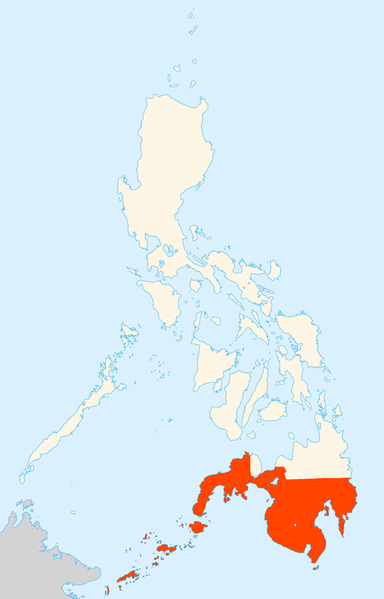
Map of the Philippines showing major island groups.
The Philippines had been a colony of Spain since the 16th century. As with so many other instances of Western 'discovery', the first meeting was filled with conflict. In the 1520s, explorer Ferdinand Magellan demanded the natives submit themselves to the King of Spain or enter into a war. Answered by a force led by King Lapu-Lapu of Mactan, Magellan's band was attacked, resulting in the death of Magellan himself. A few decades later the Spanish returned and established a permanent foothold in the Philippines.
In 1872 there was an uprising in the Spanish military led by Philippine nationals. Sparked over unfair deductions in wages for soldiers, the rebels were ideally hoping to ignite a nation-wide uprising against Spanish hegemony. After quickly being suppressed, Spain executed many involved and began stamping out any pro-independence sentiments in the Philippines. (Among those who were executed were three priests called the Gomburza, who were dubiously implicated in the rebellion due to their long-held view that the Filipino church should operate locally, rather than under the direct supervision of Spanish religious orders). Spain's heavy-handed approach backfired and caused a wave of intensifying nationalism which would eventually lead to the 1890s war of independence.
In the aftermath of the unsuccessful 1872 revolt and the execution of the Gomburza, a reformist group called the Propaganda Movement was formed. Similar to reformists in the American colonies pre-independence, the Propaganda Movement did not directly call for independence, but instead advocated for Filipinos to have the same "rights" and privileges as mainland Spaniards, as well as have representation in the Spanish legislature.
Of the writers who helped set the stage for independence, perhaps none were more influential than Jose Rizal. Rizal published two immensely popular novels in 1887 and 1891. Inspired by what Uncle Tom's Cabin had done in removing popular toleration of ignoble practices in America, Rizal wanted to write a similar novel which would expose the ignobility and corruption present in Filipino society. His novels helped form a unified spirit of Filipino nationality and were banned by the Spanish for being subversive. In the second novel, the hero becomes disillusioned with gradualistic legal changes, and plots an armed revolution. Mirroring the change in attitude which took place during the American revolution, these novels foreshadowed events to come in the Philippines as well.
Jose Rizal.
In 1892, Rizal, who had spent much of his youth studying in Europe, returned to Manila. Upon his arrival, he founded the nationalist (but not insurrectionary) organization La Liga Filipina. Nevertheless, the reputation he gained from his writings caused Spanish authorities to quickly arrest him and deport him to a remote part of the southern island of Mindanao. Although this led to the end of La Liga, its members created a secret society dedicated to armed revolution the same day Rizal was deported, called the Katipunan.
Led by Andres Bonifacio, the Katipunan expanded rapidly to multiple provinces. By August 1896 (when the organization became exposed), 40,000 men and women were members. On August 23, the revolution began with the Cry of Pugad Lawin, when citizens tore up their Spanish-issued ID papers in defiance. Bonifacio launched an attack on Manila on August 29, although it was unsuccessful. By the next day, the rebellion had spread to multiple provinces, and the Katipunan organization emerged as the main provisional government of the revolutionaries.
Andres Bonifacio.
For his role in ushering in revolutionary attitudes, Rizal himself was not supportive of the uprising--expressing his belief to Katipunan leaders that the rebels were not well-prepared enough for success in their present state. Imprisoned in Spain, he was due to travel to Cuba to serve in the Spanish military in the ongoing Cuban War of Independence. His ship was instead diverted back to the Philippines where he was tried and convicted for aiding the rebellion, despite repeatedly disclaiming it. He was executed by firing squad on December 30, 1896. It was reported that Spanish authorities used Filipino soldiers to execute him, while a squad of soldiers from mainland Spain stood behind them--ready to shoot both them and Rizal if they disobeyed their orders.
***
Due to the decentralized character of the rebellion and questions over Bonifacio's competence in the face of military defeats, the legitimacy of Katipunan's claim of being the provisional government was disputed.
After months of disagreement, on March 22, 1897, the multiple factions convened in a council and elected Emilio Aguinaldo (due to his reputation of winning multiple battles) as leader of the revolutionary government, with Bonifacio becoming the Director of the Interior. Bonifacio's faction lost much influence, but he would have been willing to accept the results had it not been for an obnoxious opposition member who questioned whether he was qualified for a position in government at all. Demonstrating democracy's ineffectiveness in times of crisis, the election counterproductively caused tensions to rise and divisions to increase during a period where unity was desperately needed.
Feeling betrayed after the Katipunan had done so much work to facilitate the revolution, Bonifacio set up an opposing government (which desired for the downfall of Aguinaldo's government after it became known that Aguinaldo had been willing to enter into peace negotiations with Spanish officials, thereby threatening to thwart the entire revolution in Bonifacio's eyes). Since this factionalism threatened the fragile rebellion, orders came to arrest Bonifacio after rumors circulated alleging he had burned a Filipino town which was unsupportive of his claim to authority. After a hasty and biased trial, he was executed for treason on May 10, 1897.
On November 1, 1897, Aguinaldo's government adopted a constitution for the provisional Republic of the Philippines.
"The separation of the Philippines from the Spanish monarchy and their formation into an independent state with its own government called the Philippine Republic has been the end sought by the Revolution in the existing war, begun on the 24th of August, 1896; and therefore, in its name and by the power delegated by the Filipino people, interpreting faithfully their desires and ambitions, we, the representatives of the Revolution, in a meeting at Biac-na-bato, Nov. 1st. 1897, unanimously adopt the following articles for the Constitution of the State." -First Constitution of the Philippines
Flag said to have been used by the revolutionaries.
This republic was short lived. Beginning in August of 1897, there had been ongoing peace talks, which were tolerated by the rebels due to military defeats in the wake of Spanish reinforcements and a general demoralization which had followed Bonifacio's execution. The truce was finalized on December 14, leading to Aguinaldo and his officers being exiled in Hong Kong, where he quickly went to work reorganizing revolutionary forces.
***
Not everyone was exiled, however. Commander Francisco Macabulos established the Central Executive Committee and resumed fighting on April 17, 1898. The Spanish-American War began on April 21, and the US fleet arrived in Manila on May 1st. The US decisively defeated the Spanish fleet, and Aguinaldo was transported back to the Philippines aboard a US ship on May 19.
Upon his return, Aguinaldo immediately resumed fighting, and his forces were bolstered by Filipinos who defected from the Spanish military. They soon unfurled the modern Filipino flag for the first time after winning the Battle of Alapan on May 28. Filipinos formally declared their independence on June 12, 1898.
Emilio Aguinaldo.
By this point, the revolutionaries had come to control all the territory surrounding Manila, and began a siege. Rather than surrender to the revolutionary forces, Spanish colonial governor of the Philippines Basilio Augustín conspired with US Admiral Dewey to stage a "mock battle" in order to transfer control of the city to US forces. Manila was transferred to US control on August 13, ending hostilities between Spain and the US in the region. The Spanish-American War came to an end on December 10, 1898 with the Treaty of Paris, which resulted in the Philippines, Guam, and Puerto Rico being transferred to US rule. The treaty was ratified in February and came into effect on April 11, 1899.
***
III. American Resistance to the "White Man's Burden"
Since the Filipino independence movement was not legally recognized, its representative Felipe Agoncillo was not allowed to participate in the peace treaty negotiations. Support for Cuban independence had nominally been one of the major factors which led to US involvement in the Spanish-American War, however, this support was not extended to the Philippines.
The Schurman Commission was set up by President McKinley on January 20, 1899 to make a recommendation on what should be done with the Philippine archipelago. Taking up the "White Man's Burden", the commission declared Filipinos 'unfit' for independence.
"the United States cannot withdraw. ... We are there and duty binds us to remain. The Filipinos are wholly unprepared for independence ... there being no Philippine nation, but only a collection of different peoples." -Schurman Commission
"they were unfit for self-government, … there was nothing left for us to do but to take them all, and to educate the Filipinos, and uplift and civilize and Christianize them" -President McKinley
Ironically, one of the few voices arguing against ratifying the Treaty of Paris and rejecting US colonial rule over the Philippines came from rabid White Supremacist Benjamin Tillman (who had spent most of his political career imposing Jim Crow in South Carolina).
"Why are we bent on forcing upon them a civilization not suited to them, and which only means, in their view, degradation and a loss of self-respect, which is worse than the loss of life itself?" -Benjamin Tillman
In a speech to Congress, Tillman read and criticized Rudyard Kipling's poem "The White Man's Burden" (first published in February 1899 as propaganda supporting US colonialism in the Philippines). Revealing that Tillman's opposition to colonialism did not arise out of compassion, he argued that the existence of "blacks" in the US was already too much of a burden and that it was unwise to absorb more "colored races" into the US.
"Take up the White Man's burden —
Send forth the best ye breed —
Go bind your sons to exile
To serve your captives' need;
To wait in heavy harness,
On fluttered folk and wild —
Your new-caught, sullen peoples,
Half-devil and half-child.
[...]
Take up the White Man's burden —
Have done with childish days —
The lightly profferred laurel,
The easy, ungrudged praise.
Comes now, to search your manhood
Through all the thankless years
Cold, edged with dear-bought wisdom,
The judgment of your peers!"
-The White Man's Burden, written by the "white" British beneficiary of colonialism, Rudyard Kipling.
***
Besides White Supremacists who didn't want the US to become a colonialist state and absorb more "non-white" subjects, there was a strong outcry from non-racist Americans who could not bear the hypocrisy of the US claiming to support Cuban independence (and our own Declaration of Independence) while desiring to colonize other territories.
On June 15, 1898 (shortly after the beginning of the Spanish-American War), the American Anti-Imperialist League was founded in an attempt to thwart the growing colonialist urges within the US. (Recall that the Kingdom of Hawaii had been overthrown by US citizens, with aid from the US government, in 1893; and that the Newlands Resolution annexing Hawaii was ratified in the House of Representatives on June 15, 1898, after a number of prior annexation attempts had failed. In addition, multiple discussions between Western powers over the fate of Samoa had already taken place).
Senator George S. Boutwell was appointed as the League's president (in no small part due to his reputation as an abolitionist, support for Civil Rights Act of 1875, and role in impeaching President Johnson). To boost its reputation, the League appointed a number of honorary Vice Presidents as spokesmen, among them former President Grover Cleveland (who had offered some opposition to the annexation of Hawaii during his time as President from 1893-1897). Other prominent members included social worker Jane Addams, author Mark Twain, and industrialist Andrew Carnegie.
"We hold that the policy known as imperialism is hostile to liberty … an evil from which it has been our glory to be free. We regret that it is necessary in the land of Washington and Lincoln to reaffirm that all men of whatever race or color are entitled to life, liberty and the pursuit of happiness. We maintain that governments derive their just power from the consent of the governed. We insist that the subjugation of any people is "criminal aggression" and open disloyalty to the distinctive principles of our government.
We earnestly condemn the policy of the present National Administration in the Philippines. It seeks to extinguish the spirit of 1776 in those islands. ... We denounce the slaughter of the Filipinos as a needless horror. We protest against the extension of American sovereignty by Spanish methods. We demand the immediate cessation of the war against liberty, begun by Spain and continued by us.
...
The United States have always protested against the doctrine of international law, which permits the subjugation of the weak by the strong. A self-governing state cannot accept sovereignty over an unwilling people. The United States cannot act upon the ancient heresy that might makes right. Imperialists assume that with the destruction of self-government in the Philippines by American hands, all opposition here will cease. This is a grievous error. Much as we abhor the war of "criminal aggression" in the Philippines, greatly as we regret that the blood of the Filipinos is on American hands, we more deeply resent the betrayal of American institutions at home. The real firing line is not in the suburbs of Manila. The foe is of our own household. The attempt of 1861 was to divide the country. That of 1899 is to destroy its fundamental principles and noblest ideals.
...
Whether the ruthless slaughter of the Filipinos shall end next month or next year is but an incident in a contest that must go on until the Declaration of Independence and the Constitution of the United States are rescued from the hands of their betrayers
...
We deny that the obligation of all citizens to support their Government in times of grave national peril applies to the present situation.
...
We propose to contribute to the defeat of any person or party that stands for the forcible subjugation of any people. We shall oppose for reelection all who in the White House or in Congress betray American liberty in pursuit of un-American gains. We still hope that both of our great political parties will support and defend the Declaration of Independence in the closing campaign of the century.
We hold, with Abraham Lincoln, that "no man is good enough to govern another man without that other's consent. When the white man governs himself, that is self-government, but when he governs himself and also governs another man, that is more than self-government-that is despotism." "Our reliance is in the love of liberty which God has planted in us. Our defense is in the spirit which prizes liberty as the heritage of all men in all lands. Those who deny freedom to others deserve it not for themselves, and under a just God cannot long retain it."
We cordially invite the cooperation of all men and women who remain loyal to the Declaration of Independence and the Constitution of the United States." -Platform of the American Anti-Imperialist League
The League attracted many Americans who had initially sincerely believed the US was "spreading freedom" or acting with the best intentions in the Spanish-American War, but immediately became disillusioned upon realizing the "White Man's Burden" was a replay of Manifest Destiny, and not an implementation of the Monroe Doctrine to throw off colonial hegemony.
"This Treaty will make us a vulgar, commonplace empire, controlling subject races and vassal states, in which one class must forever rule and other classes must forever obey." -Senator George Frisbie Hoar
Among such Americans was William Jennings Bryan, a populist politician who ran in the 1896 Presidential election. Bryan had initially supported the Spanish-American War, mistakenly believing it would remain a narrowly-focused conflict dedicated to securing Cuba's independence.
Although the League had managed to stir up great controversy surrounding the Treaty of Paris and US's role in the Philippines, the League's actions were too little too late. Bryan believed it would not be possible to gain enough political support to change the Treaty in order to clear it of its colonialist aspects. He advocated for its ratification, and it was soon accepted by a slim margin. He believed it would be more practical to formally end the War as quickly as possible and then direct political effort towards granting the Philippines its independence, rather than stall the Treaty.
Bryan again ran for the Presidency in 1900, but McKinley was re-elected by a larger margin, as the annexation of Hawaii, Samoa, and the Philippines had widespread popular support. McKinley was assassinated by an anarchist in 1901, leading to Spanish-American War veteran and Manifest Destiny junkie Theodore Roosevelt becoming President for the rest of the decade. Roosevelt was succeeded by William Howard Taft, the first US civilian colonial governor of the Philippines (1901-1903) and first provisional governor of Cuba during the Second Occupation of 1906-1909.
The Anti-Imperialist League gradually lost influence and was disbanded by 1920, although its members continued to criticize the Western-civilization-inspired colonialist attitudes (often called jingoism) which had usurped the American spirit and led to the Philippine-American War.
"I wanted the American eagle to go screaming into the Pacific ... Why not spread its wings over the Philippines, I asked myself? ... I said to myself, Here are a people who have suffered for three centuries. We can make them as free as ourselves, give them a government and country of their own, put a miniature of the American Constitution afloat in the Pacific, start a brand new republic to take its place among the free nations of the world. It seemed to me a great task to which we had addressed ourselves.
But I have thought some more, since then, and I have read carefully the treaty of Paris, and I have seen that we do not intend to free, but to subjugate the people of the Philippines. We have gone there to conquer, not to redeem.
It should, it seems to me, be our pleasure and duty to make those people free, and let them deal with their own domestic questions in their own way. And so I am an anti-imperialist. I am opposed to having the eagle put its talons on any other land." -Mark Twain, October 16, 1900.
"For, presently, came the Philippine temptation. It was strong; it was too strong, and he made that bad mistake: he played the European game, the Chamberlain game. It was a pity; it was a great pity, that error; that one grievous error, that irrevocable error. For it was the very place and time to play the American game again. And at no cost. Rich winnings to be gathered in, too; rich and permanent; indestructible; a fortune transmissible forever to the children of the flag. Not land, not money, not dominion -- no, something worth many times more than that dross: our share, the spectacle of a nation of long harassed and persecuted slaves set free through our influence; our posterity's share, the golden memory of that fair deed. The game was in our hands. If it had been played according to the American rules, Dewey would have sailed away from Manila as soon as he had destroyed the Spanish fleet -- after putting up a sign on shore guaranteeing foreign property and life against damage by the Filipinos, and warning the Powers that interference with the emancipated patriots would be regarded as an act unfriendly to the United States. The Powers cannot combine, in even a bad cause, and the sign would not have been molested.
Dewey could have gone about his affairs elsewhere, and left the competent Filipino army to starve out the little Spanish garrison and send it home, and the Filipino citizens to set up the form of government they might prefer, and deal with the friars and their doubtful acquisitions according to Filipino ideas of fairness and justice -- ideas which have since been tested and found to be of as high an order as any that prevail in Europe or America.
But we played the Chamberlain game, and lost the chance to add another Cuba and another honorable deed to our good record.
The more we examine the mistake, the more clearly we perceive that it is going to be bad for the Business. The Person Sitting in Darkness is almost sure to say: "There is something curious about this -- curious and unaccountable. There must be two Americas: one that sets the captive free, and one that takes a once-captive's new freedom away from him, and picks a quarrel with him with nothing to found it on; then kills him to get his land."
...
The plan developed, stage by stage, and quite satisfactorily. We entered into a military alliance with the trusting Filipinos, and they hemmed in Manila on the land side, and by their valuable help the place, with its garrison of 8,000 or 10,000 Spaniards, was captured -- a thing which we could not have accomplished unaided at that time. We got their help by -- by ingenuity. We knew they were fighting for their independence, and that they had been at it for two years. We knew they supposed that we also were fighting in their worthy cause -- just as we had helped the Cubans fight for Cuban independence -- and we allowed them to go on thinking so. Until Manila was ours and we could get along without them. Then we showed our hand. Of course, they were surprised -- that was natural; surprised and disappointed; disappointed and grieved. To them it looked un-American; uncharacteristic; foreign to our established traditions. And this was natural, too; for we were only playing the American Game in public -- in private it was the European. It was neatly done, very neatly, and it bewildered them. They could not understand it; for we had been so friendly -- so affectionate, even -- with those simple-minded patriots! We, our own selves, had brought back out of exile their leader, their hero, their hope, their Washington -- Aguinaldo; brought him in a warship, in high honor, under the sacred shelter and hospitality of the flag; brought him back and restored him to his people, and got their moving and eloquent gratitude for it.
...
We have crushed a deceived and confiding people; we have turned against the weak and the friendless who trusted us; we have stamped out a just and intelligent and well-ordered republic; we have stabbed an ally in the back and slapped the face of a guest; we have bought a Shadow from an enemy that hadn't it to sell; we have robbed a trusting friend of his land and his liberty; we have invited our clean young men to shoulder a discredited musket and do bandit's work under a flag which bandits have been accustomed to fear, not to follow; we have debauched America's honor and blackened her face before the world." - Mark Twain, "To the Person Sitting in Darkness", published by the Anti-Imperialist League, 1901.

Mark Twain.
***
IV. Philippine-American War: Continued Resistance to Colonial Hegemony
Upon the occupation of Manila, US forces forbid Filipino forces from entering the city, under threat of armed retaliation from the US. With the Filipino capital captured, the US established a military government in the Philippines, refusing the recognize the legitimacy of the rebels' government.
"That there must be no joint occupation with the Insurgents. The United States in the possession of Manila city, Manila bay and harbor must preserve the peace and protect persons and property within the territory occupied by their military and naval forces. The insurgents and all others must recognize the military occupation and authority of the United States and the cessation of hostilities proclaimed by the President. Use whatever means in your judgment are necessary to this end." -Major J. R. M. Taylor, summarizing the orders Admiral Dewey and General Merritt received from President McKinley on August 17, 1898.
"I am compelled by my instructions to direct that your armed forces evacuate the entire city of Manila, including its suburbs and defences, and that I shall be obliged to take action with that end in view within a very short space of time should you decline to comply with my Government's demands; and I hereby serve notice on you that unless your troops are withdrawn beyond the line of the city's defences before Thursday, the 15th instant, I shall be obliged to resort to forcible action, and that my Government will hold you responsible for any unfortunate consequences which may ensue." -Major General Elwell Stephen Otis, letter to General Aguinaldo, August 31, 1898.
Suspicious of US intentions even before the capture of Manila, some Filipino rebels actually began informing the Spanish of US troop positions and strengths, in an attempt to sabotage their new occupiers. In at least one instance, Filipino forces and US forces fired on one another before the Spanish-American War even ended.
On January 4, 1899, President McKinley's proclamation outlining his plan of the "benevolent assimilation" of the Philippines reached the islands.
Disgusted with the proclamation, Filipinos issued their own proclamation:
"Such procedures, so foreign to the dictates of culture and the usages observed by civilized nations, gave me the right to act without observing the usual rules of intercourse. Nevertheless, in order to be correct to the end, I sent to General Otis commissioners charged to solicit him to desist from his rash enterprise, but they were not listened to.
My government can not remain indifferent in view of such a violent and aggressive seizure of a portion of its territory by a nation which arrogated to itself the title champion of oppressed nations. Thus it is that my government is disposed to open hostilities if the American troops attempt to take forcible possession of the Visayan Islands. I denounce these acts before the world, in order that the conscience of mankind may pronounce its infallable verdict as to who are the true oppressors of nations and the tormentors of human kind." -Aguinaldo, proclamation of January 5, 1899.
It soon became known that the version of McKinley's proclamation which circulated in the Philippine press had been toned down by US authorities, in order to mask the extent to which Filipinos would lose sovereignty under US rule. By this point, Filipino leadership accepted that a continuation of the war of independence would soon commence.
"In my opinion the Filipino people, whom I represent, will never consent to become a colony dependency of the United States. The soldiers of the Filipino army have pledged their lives that they will not lay down their arms until General Aguinaldo tells them to do so, and they will keep that pledge, I feel confident." -Felipe Agoncillo, January 8, 1899.
To make their claim of sovereignty clear, Filipinos ratified the Malolos Constitution and established the First Philippine Republic on January 23, 1899.
Flag of the First Philippine Republic.
Two days before the Treaty of Paris was ratified by US Congress, the Philippine-American War broke out when US forces fired on Filipinos, sparking a new Battle of Manila. Aguinaldo attempted to talk to US commanders to prevent senseless bloodshed, but US Major General Elwell Stephen Otis seemed eager for an opportunity to wipe out the Filipino forces, declaring "fighting, having begun, must go on to the grim end". Having fought countless battles already, Filipinos were ready to face this new challenge:
"I order and command:
1. That peace and friendly relations with the Americans be broken and that the latter be treated as enemies, within the limits prescribed by the laws of war." -Proclamation by Aguinaldo, February 4, 1899
And thus the war of independence continued against the new colonial masters. Being one of the first sustained anti-colonial efforts in the region, it inspired individuals of multiple nations to join. General José Ignacio Paua, who was ethnically Chinese and raised in China, joined the revolution in its early days and continued fighting against the US. David Fagen, a "black" American in the US military heroically defected to the Filipino army, becoming a renowned officer. Fagen fought multiple battles against US occupiers. After fighting wound down in 1901, Fagen drifted into obscurity and his fate remains unknown. Likely emboldened by fighting in the Philippines, the anti-colonialist Boxer Rebellion began in China in November 1899.
David Fagen.
***
In a gruesome war that would wind up being longer, more costly, and more deadly than the Spanish-American War, Filipino forces adopted a guerrilla warfare strategy after it became clear that their troops were neither equipped nor trained to the level necessary to defeat US forces in regular warfare.
In response, US forces led by military governor Major General Otis pursued scorched earth suppression campaigns and established concentration camps (similar to those used by Spain during their suppression of the Cuban war of independence, and, more generally, the Reconcentrado and Reservation policies applied against Native Americans by Spain and the US to prevent any possible uprisings). The US would once again use these techniques during the Vietnam War--where the US dropped more tons of bombs than all nations combined used during WWII, and implemented concentration camps as part of the "Strategic Hamlet Program".
After major setbacks, such as the assassination of their most skilled General, Antonio Luna, Filipinos steadily lost ground. Philippine President Aguinaldo was captured March 23, 1901 and forced to swear an oath of allegiance to the US.
Many continued on in the fight for independence, however. General Miguel Malvar, who had been a long-time friend of Jose Rizal, became the second President of the Philippine Republic and issued a statement saying "Forward, without ever turning back... All wars of independence have been obliged to suffer terrible tests!" He eventually surrendered on April 16, 1902, ending the last major resistance of the war. Malvar refused to participate in the US colonial government and died in 1911.
The Philippine Organic Act was passed in July 1902, establishing a regular US civil government in the Philippines, and the US military government was abolished. President Roosevelt granted amnesty to all who were involved in the war on July 4, 1902.
***
Sporadic fighting against US forces and military police continued for at least another decade. Leading the struggle was General Macario Sakay. A member of the Katipunan, Sakay resurrected the Katagalugan (Tagalog Nation) in honor of the regime established by Andres Bonifacio at the commencement of the revolution in 1896.
Macario Sakay.
Regardless of his indignant end, Bonifacio was always held in high esteem by many rebels, and remains a national hero to this day for his role in starting the revolution.
Bonifacio favored the name Katagalugan (translated as Tagalog Nation) as the name of a de-Westernized Philippines. Although in the strict sense Tagalog refers to a linguistic group in the north, romanticists wished to apply it to all who lived in the archipelago, and restrict 'Filipino' to refer to Spanish-born Westerners. This aspiration to de-Westernize the nation was not shared by all rebels, unfortunately. Many wished for the Philippines to be a Republic modeled after Western 'Enlightenment' values, and be controlled by an elite group of citizens who were primarily educated in Europe (called the Ilustrados, demonstrating their admiration of the 'Enlightenment').
"Tagalog or, stated more clearly, the name "tagalog" has no other meaning but "tagailog" which, traced directly to its root, refers to those who prefer to settle along rivers, truly a trait, it cannot be denied, of all those born in the Philippines, in whatever island or town." -Carlos Ronquillo
"The word tagalog means all those born in this archipelago; therefore, though Visayan, Ilocano, Pampango, etc. they are all Tagalogs." -excerpt from the Katipunan cartilla (an outline of its aims and principles).
Openly declaring war on the occupiers in May 1902, Sakay received strong support from Filipinos in the areas where his forces were active. The US eventually went back to forming concentration camps to cut off manpower. To defeat Sakay, US colonial governor Henry Ide sent Sakay a letter falsely promising amnesty if he surrendered, and implied Filipinos would be granted a higher degree of self rule soon. The letter was delivered by Dominador Gómez, a nationalist who had been arrested but was promised an early release from prison if he assisted in this treacherous plot.
Sakay, believing Gómez and Ide were honest, agreed to the terms, and surrendered on July 14, 1906. He was immediately arrested and executed on charges of banditry on September 13, 1907.
"Death comes to all of us sooner or later, so I will face the LORD Almighty calmly. But I want to tell you that we are not bandits and robbers, as the Americans have accused us, but members of the revolutionary force that defended our mother country, the Philippines! Farewell! Long live the Republic and may our independence be born in the future! Long live the Philippines!" -Macario Sakay's last words
In June 1907, elections for the lower house of the Philippine Congress were held for the first time. In celebration, Filipino flags were widely flown. To ensure any resurgent nationalism was suppressed, the US made the display of the flag illegal in August 1907.
***
Beyond the main branch of Philippine resistance, the Moro Rebellion raged on in the south. In contrast to the Ilustrado class (who were primarily Catholics and had a tendency to admire Western culture) which had made up much of the leadership of the war of independence, the Moros trace their culture back to the many Mohammedan kingdoms which abounded throughout the Indonesian archipelago.
At its peak, the Sultanate of Sulu controlled northern Borneo, Palawan, and parts of Mindanao. It was one of the last kingdoms in the region to be annexed--fighting against the Spanish and other colonialists for centuries. It was not until 1878 that a series of treaties began to be imposed, spelling the downfall of the sultanate. In 1899 the US government asked the Sultan of the Ottoman Empire, in his capacity as the most powerful Mohammedan world leader, to assure Moro leaders that the US would allow freedom of religion and thus the leadership should not join in the Philippine-American War which was raging in the north. (In addition to Sulu, other major sultanates included Maguindanao and the Confederation of Lanao.)
Moreover, the US did not have enough manpower to occupy Spanish forts in the Sulu region until mid 1899, risking total loss of the region if the Moros rebelled. Katipunan member General Vicente Álvarez had captured the Spanish Fort Pilar on Mindanao island in May 1899, and founded the Republic of Zamboanga. If the entire island of Mindanao had risen in synchronized rebellion, the US would have had to split its forces. The US achieved a lucky victory against the Republic of Zamboanga--soon after capturing the fort Álvarez left to recruit more individuals around the province, and the US convinced power-hungry acquaintances to surrender the fort in exchange for being recognized as leader of the Republic by the US. In March 1901 the US held fake elections for the Republic, and by March 1903 the Republic was effectively dissolved. Álvarez was captured by the US in 1902 and imprisoned. After being released from prison he served in local government.
Statue of Vicente Álvarez in Zamboanga City.
Flag said to have been used by the Republic of Zamboanga.
The position taken by the Sulu Sultanate was that the treaty of suzerainty signed with the Spanish in 1878 was void now that Spain had relinquished their claim on the Philippines, and the US must therefore negotiate a new treaty. On August 20, 1899 the US signed the Bates Treaty with the Sultanate of Sulu. This treaty formally put Sulu under a US protectorate, separate in status from the rest of the Philippine colony. Although Sultan Jamalul Kiram II wanted to push for a more fair treaty, his ministers forced him to concede to US demands, hoping to prevent war.
Of course, like so many other disingenuous Western treaties, in both the Spanish-language and English-language versions of the 1878 and 1899 treaties, respectively, it was stated that the sultanate relinquished its sovereignty. In the Tausug-language translations, both treaties mentioned a protectorate status--with no relinquishment of sovereignty. In any case, the US did not honor the treaty. Once resistance in the north was stamped out in mid 1904, the US ceased the payments which it had arranged with the sultanate in exchange for its loyalty.
The US used the excuse that Moro leaders had failed their duty to suppress anti-US insurrections; however, it was the US who escalated the conflict by launching the Battle of Bayan on May 2, 1902. (In addition to the earlier killing of Prince Amirul by US troops in 1900). The Sultan stated he was unable to stop sporadic revolts, as the US had imposed taxes on the Moro people without their consent, inciting deep grassroots resistance.
Roosevelt's July 1902 declaration of the end of the Philippine-American War and end of the military government explicitly exempted the Moro region, where conflict was ongoing. The military government remained effective in the Moro Province until insurrections were deemed sufficiently suppressed in 1913.
Moro Province borders, 1903-1914.
US suppression was ruthless. In 1906, during the First Battle of Bud Dajo (also called the Moro Crater Massacre), approximately 1000 Moro men, women, and children had taken refuge in the crater of an extinct volcano. US forces slaughtered 994 of them, resulting in one of the worst massacres ever carried out by US forces. (For reference, the infamous Wounded Knee Massacre resulted in the slaughter of 300 out of 350 individuals). Once news reached the press, Mark Twain and many other Americans published countless outraged responses. US suppression incited an equally-ruthless response among the Moros; US troops and military police were constantly attacked by Juramentados--swordsmen who engaged in heroic suicide charges.
In 1911, colonial provincial governor General John Pershing began a strict policy of disarming the province (both undermining the 2nd Amendment and serving as a testament to its effectiveness for dealing with an ignoble occupation). All who refused were annihilated. During the Battle of Bud Bagsak in 1913, 500 individuals who refused to surrender their weapons (and non-combatants who took refuge with them on Mount Bagsak) were slaughtered in one of the last major events of the rebellion.
In March 1915, Moro Province Governor Frank Carpenter drafted a treaty to formally end the rebellion by forcing the Sultan and his government to officially abdicate and relinquish their claim of sovereignty. (The sultanate had reasserted its sovereignty in 1904, maintaining that the earlier Bates Treaty was voided by US non-compliance). This new treaty was implemented in 1919, leading to an uneasy peace.
In 1946, the Moro region was incorporated into the independent Philippine Republic, leading to renewed conflict. This conflict stemmed from both questions of sovereignty and resistance to mainstream Filipino culture which was deemed too Western in the eyes of Moro resistors. Conflicts remain ongoing today, with a number of different ideological groups. Some groups, such as the Moro National Liberation Front (MNLF) accuse the US of continuing colonialist endeavors by stationing troops in the region to intimidate China, and further accuse the US of covertly propping up ISIL-aligned rebels (such as Abu Sayyaf, who the MNLF fought against) to destabilize the Philippines and provide an excuse to maintain continued presence.
***
V. US Colonization: Philippine Insular Government and Commonwealth
Public support of the Spanish-American War came in no small part due to alleged atrocities that Spain was committing against its colonies in Cuba and the Philippines. Unsurprisingly, during the Philippine-American War, the US committed atrocities worse than any Spain was said to have committed.
Senator George Frisbie Hoar served on a committee overseeing affairs in the Philippines and investigated war crimes during the Philippine-American War, but an overwhelmingly pro-colonialist Congress prevented his investigations from having any effect.
Hoar was an early supporter of women's suffrage, an anti-racist who opposed the Chinese Exclusion Act of 1882, and was outspoken against US colonial ambitions in the Philippines, Hawaii, and Panama (which was at the time part of Colombia, but the Roosevelt administration funded rebels to break away from Colombia, in exchange for the Panama Canal Zone becoming annexed by the US).
"You have sacrificed nearly ten thousand American lives—the flower of our youth. You have devastated provinces. You have slain uncounted thousands of the people you desire to benefit. You have established reconcentration camps. Your generals are coming home from their harvest bringing sheaves with them, in the shape of other thousands of sick and wounded and insane to drag out miserable lives, wrecked in body and mind. You make the American flag in the eyes of a numerous people the emblem of sacrilege in Christian churches, and of the burning of human dwellings, and of the horror of the water torture. Your practical statesmanship which disdains to take George Washington and Abraham Lincoln or the soldiers of the Revolution or of the Civil War as models, has looked in some cases to Spain for your example. I believe—nay, I know—that in general our officers and soldiers are humane. But in some cases they have carried on your warfare with a mixture of American ingenuity and Castilian cruelty. Your practical statesmanship has succeeded in converting a people who three years ago were ready to kiss the hem of the garment of the American and to welcome him as a liberator, who thronged after your men when they landed on those islands with benediction and gratitude, into sullen and irreconcilable enemies, possessed of a hatred which centuries can not eradicate." -George Frisbie Hoar, May 1902 speech to the United States Senate.
After the burdensome war and costly occupation, US attitudes shifted in favor of eventually granting the Philippines independence, rather than maintaining a perpetual colony.
"We shall have to be prepared for giving the islands independence of a more or less complete type much sooner than I think advisable." -Theodore Roosevelt, 1907
"The Philippines are at present our frontier but I hope we presently are to deprive ourselves of that frontier." -Woodrow Wilson, 1912
In 1916 the Jones Act was passed, formally establishing a future path to Philippine independence once the US government deemed the Philippines had adopted a suitably Western form of government. (A 1912 version of the Jones Bill proposed to grant independence in 1921, but this version was not passed). The law established an elected Philippine House and Senate, but a US-appointed governor retained supreme veto power. In the wake of the 1916 Philippine elections, leaders Manuel Quezon and Sergio Osmeña ensured they would remain a prominent force in Filipino politics for decades to come.
Nevertheless, the Philippines remained a colony--its residents did not obtain US citizenship (in contrast to Puerto Ricans, who obtained it in 1917 due to a law also sponsored by Congressman Jones) and the Philippine Congress's laws did not effect US citizens living in the archipelago.
Hoping to gain US favor, the Philippine government gave strong support to the US during WWI, and suspended calls for independence during this time. This was apparently enough to convince President Wilson that the Philippines was now "mature" enough to independently support Western policies. In his 1921 farewell message, he endorsed granting immediate independence, but subsequent administrations disagreed.
"Allow me to call your attention to the fact that the people of the Philippine Islands have succeeded in maintaining a stable government since the last action of the Congress in their behalf, and have thus fulfilled the condition set by the Congress as precedent to a consideration of granting independence to the islands.
I respectfully submit that this condition precedent having been fulfilled, it is now our liberty and our duty to keep our promise to the people of those islands by granting them the independence which they so honorably covet." -Woodrow Wilson
After WWI, Filipinos resumed their calls for independence, believing they had fulfilled any possible obligations they may have owed the US, due to fighting with them in WWI. (This seems to have been given credence by the fact that the US commissioned the USS Rizal in 1919 in honor of Filipino service in WWI).
On March 17, 1919, the Filipino legislature passed the Declaration of Purposes, reiterating their demands for independence. Additionally, they sent a delegation to the US to present their case for independence to Secretary of War Newton Baker. The display of the Filipino flag was unbanned on October 30, 1919, and it became the official flag of the Philippines on March 26, 1920.
The new US colonial governor, General Leonard Wood (1921-27), did not share Wilson's enthusiasm for decolonization. He made strong use of his veto power, and incited numerous protests from Filipino legislators. Under his rule, he banned future independence delegations from being organized by the Philippine Congress, but over half a dozen additional privately-funded delegations were formed regardless.
Not falling upon deaf ears, US Congress passed the Hare–Hawes–Cutting Act over President Hoover's veto in January 1933. This Act would have guaranteed independence after 10 years, but caused the Philippines to remain a virtual puppet of the US. The Philippine legislature rejected this Act, and the Tydings–McDuffie Act (providing more favorable terms, and retaining the 10 year guarantee for independence) was enacted in March 1934. As a consequence of the Act, the Philippines adopted a constitution and became a Commonwealth of the US in 1935. Independence was set for July 4, 1946. Manuel Quezon was elected as the first President of the newly-independent Philippines.
***
The Tydings–McDuffie Act was not an act of pure benevolence, however. Rather, it was a way to finally "rid" the US of its "burden" to the Philippines. The Act restricted the number of Filipinos who could immigrate to the US to only 50 per year, and family unification was halted. (The Immigration Act of 1917 had previously allowed unrestricted immigration of Filipinos to the US mainland). The Filipino Repatriation Act of 1935 provided funding so that Filipino families could be deported "reunified" back in the Philippines instead. This deportation attempt was largely unsuccessful, with only 2,000 individuals leaving the US out of an estimated 45,000 Filipinos living within the US mainland.
The US Supreme Court found the Repatriation Act unconstitutional in 1940, which led to the passage of the Nationality Act of 1940 (which allowed for Filipinos who had rendered service to the US to become citizens under certain, limited, circumstances). Until this point, Filipinos were "US Nationals" only--and not qualified for citizenship--reflecting their status as colonial subjects.
The Immigration Act of 1924 (often called the Asian Exclusion Act) remained in effect, and the Philippines was within the geographic area barred from immigrating. This would have meant that after independence no Filipinos would be allowed to immigrate to the US without additional laws making exemptions. The Luce–Celler Act, signed into law only days before Filipino independence, allowed for a grand total of 100 Filipinos per year to immigrate to the US and become naturalized citizens. The Filipino Naturalization Act of 1946 removed restrictions on naturalization of Filipinos, and granted citizenship to all Filipinos who had been living in the mainland US prior to March 24, 1943.
***
VI. Anti-Colonial Resistance in Samoa
Like the Hawaii and the Philippines, Samoans put up a resistance against their colonizers. In 1908, Lauaki Namulau'ulu Mamoe began an organization in Western Samoa called Mau a Pule, consisting largely of royalty and others in leadership positions who were unwilling to concede to German rule. The German colonial governor of Western Samoa convinced Lauaki to demobilize his troops and enter into a "peace talk" aboard a German vessel. As one may have anticipated, it was a dishonorable trap--Lauaki was captured and he and 71 others were exiled to Saipan (a German colony at the time) on April 16, 1909.
Lauaki Namulau'ulu Mamoe.
Samoan leaders aboard a German prison ship, 1909. Lauaki is in the center, standing.
Far from ending the urge for resistance, a wider Mau movement soon spread throughout the islands. After WWI, control of Western Samoa was transferred to the British Dominion of New Zealand. The influence of the Samoan movement strengthened pre-existing Maori resistance in New Zealand, and Samoans likewise received the solidarity of the Maori King Movement.
(Like the Hawaiians, the Maori believed that if they formally established a monarchy of the same political rank as European monarchies, then it would be more difficult for Western powers to simply ignore or trivialize their sovereignty. The King Movement began in the 1850s, and remains influential to this day. In no small part, this has arguably resulted in aboriginals being more fairly represented in New Zealand than any other Western nation. This series of articles focuses on the history of the US in the Pacific, and therefore further discussion of the King Movement will be left to future articles).
After New Zealand captured German colonies in the Pacific, those who had been exiled in Saipan were shipped back to Samoa in 1915, although many died en route (including Lauaki). In 1919, the Spanish Influenza spread to Western Samoa, and the colonial government took no precautions to prevent its spread, leading to upwards of 1/4 of the population dying and 90% becoming infected. This death toll was one of the most severe in all of Oceania. (In contrast to American Samoa, where proper quarantines and sanitation precautions prevented anyone from dying. The colonial military governor of Western Samoa, Robert Logan, arrogantly rejected US aid during the epidemic). This led to renewed support for the Mau movement, although it took time to regain manpower.
In 1926 Samoans began drafting a statement of grievances to submit to the New Zealand government, although this was blocked by colonial military governor Major-General George Richardson. Richardson, apparently unaware of the decades-worth of grassroots anti-colonial movements existing throughout the entire Pacific Ocean, believed that the independence movement in Samoa was being funded by other European nations in order to disrupt British influence in the south Pacific.
"I do not approve of a political meeting which mixes Native politics with European politics, as its tendency must be to disturb the peace, order, and good government of the Natives." -George Richardson, demonstrating his Western hubris, November 12, 1926.
In March 1927, the new Mau movement was formally organized--calling itself the League of Samoa and, later, O le Mau a Samoa. The New Zealand government estimated that 2/3s of Samoans supported the movement, although the movement itself claimed upwards of 90% support.
After Richardson ordered the Mau to disband in mid 1927, Samoans began widespread civil disobedience--they refused to pay taxes, pulled their children out of Western schools, and went on strike to cripple the coconut and banana plantations. In September 1927, the New Zealand government decided to hear their grievances, but soon upheld Richardson's administration.
One prominent Mau leader was Olaf Frederick Nelson, a multi-ethnic Samoan of royal heritage. He served on the Samoan legislature, but was constantly overruled by the more numerous Western-appointed members. He founded a popular newspaper in 1927 and was exiled to mainland New Zealand by the colonial government in January 1928. During his exile, he protested directly to the New Zealand government. His campaigning won him support of the Labour Party. In addition, he presented an anti-colonial petition to the League of Nations, which was signed by over 85% of Samoan men. Upon Nelson's deportation, Lealofi III, head of the Tamasese dynasty (thus heir to the throne of Western Samoa), had become the leader of the Mau. Leading by example, he was arrested for admirably refusing to pay taxes to the colonial regime.
In January 1928 the Mau movement turned sympathetic policemen into a paramilitary--enforcing a ban on Western stores in Apia. The military was called in and arrested hundreds of Mau supporters--who gladly volunteered to be arrested, overwhelming the prison system and leading to the release of the protesters. Defeated, Richardson resigned in April 1928. Determined to win, the new colonial governor, Colonel Stephen Allen, turned to a more brutal suppression campaign.
On December 28, 1929 the Mau organized a parade to welcome home two Samoans who were returning from exile. Police warned Mau leaders that they would be arrested if they participated, but they were not intimidated. As police moved in, the marchers bravely resisted police. Some police opened fire with pistols and were chased by the crowd, resulting in one policeman being justifiably beaten to death. Attempting to intimidate the marchers, a police squad garrisoned on the second floor of a building and shot a machine gun over the heads of the crowd. Realizing that they would probably provoke a full-on riot (since the protesters would likely assume the machine gun was firing into the crowd) and potentially be burned to death while surrounded in the building, cowardly members of the police squad opened fire on the marchers with rifles, killing 11 and wounding over 50. Among the dead was Tupua Tamasese Lealofi III, and among the wounded was Mulinu'u I, head of the Mata'afa dynasty. According to eyewitness accounts, Lealofi III had been attempting to prevent the crowd from breaking into a disorderly riot when he was killed.
This massacre is known as Black Saturday.
Funeral procession of Tupua Tamasese Lealofi III. Mata'afa Faumuina Fiame Mulinu'u I is standing in the center of the image, with one white stripe on the bottom of his lavalava.
"At the present moment he [the Samoan] is in the position of a sulky and insubordinate child who has deliberately disobeyed his father, as the administrator is generally termed, and no peaceful persuasion will induce him to submit. There is no alternative, therefore, but to treat him roughly … force is the only thing which will appeal to the Samoan." -Commodore Blake, commander of the marines, explaining the Western view of diplomacy towards non-Westerners.
Incorrectly believing the Mau's spirit had been broken, colonial governor Allen increased the pressure, declaring the Mau illegal and banning its uniform from being worn. By January, over 1500 Mau members had fled to the countryside, pursued by the military. By March a truce was reached, but the organization remained illegal. In 1933 Nelson returned from exile, but was immediately re-exiled after his return caused Mau morale to soar. In 1935 the Mau-sympathetic Labour Party won elections in New Zealand. In mid-1936 the Mau was unbanned and Nelson's exile was lifted.
Although tensions eased, dislike of colonial rule never lessened. With global pressure for decolonization mounting, on January 1, 1962, Western Samoa became one of the first Oceanic nations to gain independence. Fiame Mata'afa Faumuina Mulinu'u II became the first Prime Minister and Malietoa Tanumafili II became head of state jointly with Tupua Tamasese Meaʻole (until Meaʻole's death in 1963, after which Tanumafili II solely held this position until his death in 2007). In 2002 New Zealand Prime Minister Helen Clark issued an apology for Samoa's treatment during the colonial era, including the handling of the Spanish Flu epidemic and the Black Saturday massacre.
Flag of the independent nation of Samoa.
***
In contrast to Western Samoa, the resistance in American Samoa was not as strong. There were multiple reasons for this. Firstly, the US quickly signed multiple treaties with the heads of Samoan dynasties and leaders of islands to secure their loyalty; these treaties were formally re-acknowledged by US Congress under the Ratification Act of 1929. Secondly, early US administration seemed to be less reckless than German/New Zealand administration (recall the Spanish Flu epidemic). Thirdly, there was more effective suppression of anti-colonial sentiments.
WWI veteran Samuelu Ripley was one of the most prominent leaders of the American Samoa Mau movement. His organization, Samoan Cause, protested against the US military administration starting in the early 1920s. This organization even gained some US supporters--Lieutenant Commander Creed S. Boucher tried to get colonial governor Commander Warren Jay Terhune declared insane in order to stop his tyrannical rule in Samoa, and Boucher's wife smuggled Samoan petitions to the US press. After an investigation was launched into his administration, Terhune committed suicide. Ripley had a residence in California, and he was eventually prevented from reentering Samoa.
In 1930, a committee tasked with examining the status of Samoa was organized by the US government. Samoans heavily advocated for US citizenship, recognizing the injustice of the colonial distinction between citizens and non-citizen subjects. Convinced by their arguments, the committee recommend granting citizenship immediately.
"[M]any years we have been under the American flag. . . . But we have not received the word ‘true American.’ We are not taken yet as citizens of America; but this morning I pray the commissioners that they will do what they can that we may be made citizens of the United States to serve the United States." -Chief Fanene, an American Samoa Mau movement leader
“[T]he soil of Tutuila and Manua has been made a part of America but the people of Tutuila and Manua are not American Citizens, that as Tutuila and Manua has been accepted as part of America, I therefore pray that the people of Tutuila and Manua may also become citizens of America.” -Samuel Tulele Galeai
“Section 4 is the citizenship section, which is the one thing the Samoans must have if they are to be satisfied. They now have no citizen status in the world. They feel this very keenly.” -Representative Carroll Beedy, part of the Samoan Commission.
Despite finding support in the US Senate, the House of Representatives repeatedly voted down bills for Samoan citizenship throughout the 1930s. A gathering of Samoan leaders once again demanded citizenship in 1945, but their proclamation was suppressed by the Navy.
"What I am opposed to is taking American citizenship and flinging it . . . out to a group of people absolutely unqualified to receive it . . . . [T]hese poor unsophisticated people . . . . Let us not load upon them the responsibility of American citizenship. They can not take it . . . I say to you that this is a right that we ought to circumscribe with safeguards and is something that should never be given except as a privilege, and let us not give it to these people until they are able to appreciate the privilege. [Applause.]" -Representative Thomas A. Jenkins, demonstrating his colonialist hubris.
In 1949, the US Congress was considering passing an Organic Act to further tie Samoa's government to the US. Due to opposition by many Samoan leaders, who feared this would lead to less control of their own affairs than existed under the status quo, this Act was not passed. Rather, Samoa achieved greater self-governance by the creation of its legislature (the Fono) in 1949. Samoa was under the control of US military governors until 1951, adopted its own constitution in 1967, and began electing its own governors in 1977. Since no Organic Act was ever passed by the US Congress the Samoan territorial government remains "unorganized", and hence the ultimate authority of all Samoan affairs rests in the hands of the US President, who has delegated this task to the Secretary of the Interior.
Samoa is the only territory in the US today that can still be called a colony. Its residents retain the status of "US Nationals" only--and are not US citizens by birth. Ironically, largely because of its relative self-rule and lack of integration into the US, there are no major independence movements today.
With all due respect to past and present Samoans who opposed Western civilization, it may be suggested that the US has fulfilled the "white man's burden" in American Samoa. On the eve of independence in Western Samoa, American Samoans once again presented a demand for citizenship but simultaneously voiced their loyalty to remaining part of the US. Despite no action from the US Congress on the citizenship question, Samoans have continuously voiced their willingness to remain a US colony. The territory even has a higher-than-average rate of military enlistment--fighting in a military where they, as non-citizens, are not allowed to serve as an officer and fighting for a nation where they are not allowed to hold public office in the mainland US (even though 3/4s of Samoans live in the mainland).
Samoan politicians frequently take a submissive stance on the citizenship issue--stating citizenship is a mere privilege whose fate rests in the hands of an unempathetic US Congress, rather than a birthright as guaranteed by the 14th Amendment of the US Constitution. Samoan politicians who aren't in favor of citizenship or a formally-organized territorial government often raise fears that citizenship and governmental incorporation into the US would result in reduced self-determination. (Compounding problems, there are ethnocentric Samoans who wish to continue clan- and caste-based forms of traditional government, which would be greatly impaired, if not impossible, if Samoa becomes completely integrated into the US legal system.)
Meanwhile, the independent nation of Samoa has been a prime example of what actual self-determination looks like. It is not something which can be achieved while part of another nation--especially not while under one of the last remaining colonial-style territorial statuses on Earth.
"The General Assembly, ...[h]aving considered the question of American Samoa,
...
3. Reaffirms the inalienable right of the people of American Samoa to self-determination and independence in conformity with the Declaration on the Granting of Independence to Colonial Countries and Peoples;
4. Reiterates the view that such factors as territorial size, geographical location, size of population and limited natural resources should in no way delay the speedy implementation of the Declaration, which fully applies to the Territory;" -excerpt from a United Nations document on American Samoa, 1981
Flag of American Samoa.
***
VII. Hawaii: Post-Annexation
Hawaii was annexed in 1898 and the Hawaiian Organic Act of April 1900 organized a territorial government in Hawaii. The Act granted US citizenship to all who were citizens of the Republic of Hawaii prior to its annexation by the US, and granted US citizenship for all who were subsequently born in Hawaii. Disturbingly, Sanford Dole, who led the coup overthrowing the Kingdom of Hawaii and led the junta in control of the Republic of Hawaii, was appointed as the first governor of the US Territory of Hawaii. US businesses (including the Dole Food Company, owned by Sanford Dole's cousin) thrived, and "white" voyeurs tourists flocked to observe the "exotic" life of the Hawaiians.
After decades of armed resistance, Robert William Wilcox abandoned hope in overthrowing the (quite frankly, illegitimate) Western government, and formed the Home Rule Party of Hawaii in 1900. His party immediately gained a plurality of seats in Hawaiian congress, and proposed a number of beneficial laws (including adding Hawaiian-language translators at legislative sessions, as many legislators did not speak English. The Organic Act, demonstrating its bias for Western civilization, had stipulated that only English was to be used in governmental matters). However, Governor Dole, whose life had been devoted to delivering Hawaii to the US, obstructed the Home Rule Party's attempts for greater self-rule.
Western propaganda denigrating the Home Rule Party, 1901.
Although Wilcox urged for electoral unity to oppose Western rule (observing that ethnic Hawaiians were the majority of voters), the factionalism which is inherent in democracy reared its ugly head and divided Hawaiians.
In 1902 Prince Kuhio (a participant in the 1895 rebellion against Dole's Republic of Hawaii) left the Home Rule Party and joined the Hawaii Republican Party, leading to a large loss for the Home Rule Party. Prince David Kawānanakoa joined the Democrat Party. While the centralized rule of monarchs in Hawaii had managed to keep society relatively united against Western intrusion over the past century, despite the abundance of political parties, it only took 2 years for Hawaiians to become hopelessly divided under democracy. Wilcox died in October 1903 and the Home Rule Party dissolved by the early 1910s.
Prince Kuhio served in the Hawaiian congress from 1903 until his death in 1922. During his time, he protested the terms of the Hawaiian Homes Commission Act, which established lands held in trust to be used by native Hawaiians. Under the Act, the US government defined "native Hawaiian" with a 1/2 blood quantum. Just like blood quantums enforced on the US mainland, such a design was intended to gradually reduce the number and influence of individuals who were eligible. In 1918 Prince Kuhio founded the Civic Club of Honolulu, as a social network dedicated to interest in Hawaii culture.
Prince Kuhio.
Prince Kuhio proposed the first bill for Hawaiian statehood, in 1919, but it was ignored. Territorial Governor of Hawaii Samuel Wilder King again proposed a statehood bill in 1935, but it never made it to a vote, as FDR opposed Hawaiian statehood. In 1940 the question of statehood was placed on the Hawaiian electoral ballot, with 2/3s of voters favoring statehood. This resulted in no action.
Under the rule of the Jim Crow USA, "race relations" in Hawaii deteriorated. Perhaps the most infamous example of this was the Massie Trial in 1932. Socialite Thalia Massie had been beaten, and falsely accused multiple "non-white" Hawaiians. Newspapers described the men accused as being thugs and brutes--identical to present-day race-baiting news reporting which often paints "non-white" defendants as guilty before even having a trial. Jurors could not reach a verdict and a mistrial was declared, but Massie's even more obnoxious mother was angered that the men were not immediately convicted. She convinced Massie's husband and some of his fellow navy friends to kidnap Joseph Kahahawai, a local boxer who was among the accused, and beat him to extract a false confession. They ended up murdering him and trying to dispose of his body. They were arrested, but merely convicted of manslaughter. Even more shockingly, their 10-year sentences were commuted to 1 hour. Despite this travesty of justice, the US national media continued to paint Massie as a victim of ravenous "non-whites".
Usually, the Western establishment in Hawaii kept ethnic groups divided and suspicious of each other, as part of a divide and conquer strategy. Hawaiian monarchs had done much to encourage immigration to Hawaii, turning it into a multi-ethnic nation early on (much to the disappointment of White Supremacists from the US, who had passed a number of immigration laws to prevent "non-whites" from coming to the US--e.g. the Chinese Exclusion Act of 1882). Tired of being exploited by corporations owned by Western industrialists, a large labor strike uniting Hawaiians of Chinese, Japanese, ethnic Hawaiian, Portuguese, and Filipino heritage commenced in August 1938. Police ended up shooting at the strikers, wounding 50.
***
Labor strikes resumed after WWII, bolstered by returning American soldiers of Japanese heritage. In 1954, after nearly a decade of various strikes, a large political re-alignment occurred in Hawaii, which saw the rise to prominence of politician John Burns. Burns had wide multi-ethnic support for his aid in connecting strike leaders, and helped lead an effort to push for Hawaiian statehood.
In 1946 the newly-established United Nations began a global decolonization effort, making a list of territories it deemed "non-self-governing" and passing a resolution demanding member states takes steps to rectify this. Hawaii was among the territories on the list. Unable to deny the absurdity of claiming to fight against supposed Japanese and German plots for 'world domination', yet leaving Hawaii in the same territorial status it had been since it was annexed to the US (an annexation which was only possible due to a coup overthrowing the monarchy, which the US had given military support to!!), Hawaii was granted statehood in 1959. It was the last state to join the union.
Territories which remain on the UN's non-self-governing list in the 21st century.
Statehood was not without opposition, given the fact that the US had no moral or legal claim to ownership of Hawaii in the first place. Alice Kamokila Campbell (daughter of royal family member Abigail Kuaihelani Campbell, who was the leader of the women's branch of the Hui Aloha ʻĀina--an organization which had done much to protest against the annexation of Hawaii) emerged as the leading voice against statehood starting in 1946.
"I do not feel...we should forfeit the traditional rights and privileges of the natives of our islands for a mere thimbleful of votes in Congress, that we, the lovers of Hawaii from long association with it should sacrifice our birthright for the greed of alien desires to remain on our shores, that we should satisfy the thirst for power and control of some inflated industrialists and politicians who hide under the guise of friends of Hawaii, yet still keeping an eagle eye on the financial and political pressure button of subjugation over the people in general of these islands." -Alice Kamokila Campbell, January 17, 1946
Alice Kamokila Campbell.
Despite his unusual willingness to embrace a multi-ethnic electorate during the Jim Crow era, US-mainland-born John Burns did not seem to believe that Hawaiians had valid complaints against being part of the US:
"The reasons why Hawaii did not achieve statehood, say, ten years ago—and one could without much exaggeration say sixty years ago—lie not in the Congress but in Hawaii. The most effective opposition to statehood has always originated in Hawaii itself. For the most part it has remained under cover and has marched under other banners. Such opposition could not afford to disclose itself, since it was so decidedly against the interests and desires of Hawaii's people generally." -John Burns, 1959.
Not seeing any hope of achieving independence and tired of continued existence as a Territory, over 90% of Hawaiians supported statehood.
Although there remain active independence and anti-Western resistance movements in Hawaii today, we may venture to say that the "white man's burden" has nearly succeeded in Hawaii as well, now that it has been made an integral part of the US via its statehood and since very few mainland Americans know the utter ignobility which led to Hawaii's acquisition by the US.
***
Summary and Conclusion of Chapters 1-3
Despite our humble origin as a group of colonies rebelling for freedom and a young nation nobly declaring the New World off limits to Western colonization under the Monroe Doctrine, by the mid-1800s the US had begun European-style territorial expansion and one-sided diplomacy.
With the Mexican-American War in the 1840s and continued ethnic cleansing of Native Americans, Manifest Destiny had corrupted the US psyche. It placed our nation on a path towards joining Western civilization, rather than removing ourselves from it and manifesting the authentically American civilization whose sparks had been seen during the First Thanksgiving and Declaration of Independence. After conquering the North American continent, the US went on to participate in the "opening" of Japan and China to Western speculation.
Although all the territory acquired in the Mexican-American War had been integrated directly into the US (and hence was never a colony), laws were soon passed allowing for US territories to remain unintegrated indefinitely. The 1856 Guano Islands Act appears insignificant on its surface--it merely allowed for US citizens to claim uninhabited islands for the US--but it had wide-reaching implications. The Act established the concept of 'insular territory' and set the stage for colonial land grabs never intended for full integration into the US.
Having fully embraced the "white man's burden" in the Spanish-American War, the US became a full-fledged colonial world power--rapidly annexing Hawaii, Samoa, the Philippines, Guam, and Puerto Rico--by 1900.
Our acquisition of Hawaii and Samoa was utterly ignoble. In the Kingdom of Hawaii, Westerners (including US citizens) had long been influential members of society. In 1893 a group of them conspired to overthrow the kingdom and immediately petition for annexation into the US. The coup was aided by US government minister John L. Stevens, who landed US troops in Hawaii to intimidate the Hawaiian military from mobilizing against the coup.
In Samoa (which had formally become a united kingdom with Hawaii under King Malietoa Laupepa and King Kalākaua's reigns in 1887, becoming what would have been the first step in Kalākaua's vision of an anti-Western alliance in the Pacific), the US sat at the table with Germany and Britain to carve up Samoa. Rather than defiantly shoving the Declaration of Independence in Britain and Germany's faces or extending the anti-colonial Monroe Doctrine to the Pacific, the US had "matured" and began taking independence away from other nations in an utterly un-American fashion.
1899 cartoon showing the US and the UK in a race to Westernize their colonies.
1899 cartoon depicting Uncle Sam as a patronizing pedagogue.
The US government had managed to convince the public that the Spanish-American War was being undertaken to assist Cuba's war of independence against Spain. Upon US victory in the war, Cuba became a US protectorate rather than achieving actual independence. Even worse, however, was how we treated Filipinos who had been waging their own war of independence against Spain.
One year after Cubans began a war for independence, Filipinos began their own. During the war, the US transported exiled Filipino leaders back to the country, leading many to believe the US was supporting their yearning for independence. However, US commanders instead made an agreement with the Spanish colonial governor to quickly transfer Manila to US control to avoid letting it be captured by the Filipinos. Despite Filipino troops having been instrumental in the siege of Manila, US troops had been given orders to shoot Filipino soldiers should they get too close to US lines during the occupation of Manila.
Perhaps disappointed that the Spanish hadn't put up more of a fight, trigger-happy US troops soon fired upon Filipino troops. US commanders, far from punishing their reckless troops, rejoiced at the chance to crush the rebels now rather than have to deal with them after the US finalized the terms of annexation with Spain. The Philippine-American War ended up being longer, more expensive, and more brutal than the Spanish-American War. The barbarity and massacres arguably exceeded in gruesomeness much of the violence the US committed against Native Americans; it certainly exceeded the alleged Spanish atrocities in Cuba which had served as an excuse for the US to start the Spanish-American War.
Beyond this, forces in the US government had done nearly everything in their power to delay independence and suppress resistance movements in US Pacific territories throughout the first half of the 20th century. Despite anti-colonialist Americans (such as the Anti-Imperialist League) resisting at every step of the way, the US had fully taken up the "white man's burden" and demonstrated that it was willing to trample on all of the American principles upon which our nation was originally founded. The US firmly aligned itself with White Supremacy and Western civilization, a painful legacy which we--Americans who know that American civilization is antithetical to Western civilization--are trying to correct to this day.
The first step to rectifying the injustices of the past is to learn about their existence in the first place. Individuals who support the traditional Western-civilization-sympathetic narrative of history often accuse those who advocate for de-Westernizing history (such as by removing monuments to racists and tyrants) of wanting to "erase" or "ignore" history. As this series of articles proves, we are more than willing to discuss history. Far from suppressing discussion of history, anti-colonial and anti-Western viewpoints have only encouraged interest in learning about the past and discussing events which Westerners have tried to sweep under the rug.
American civilization will never be manifested until we can confront the past and atone for crimes committed under our nation's name.